
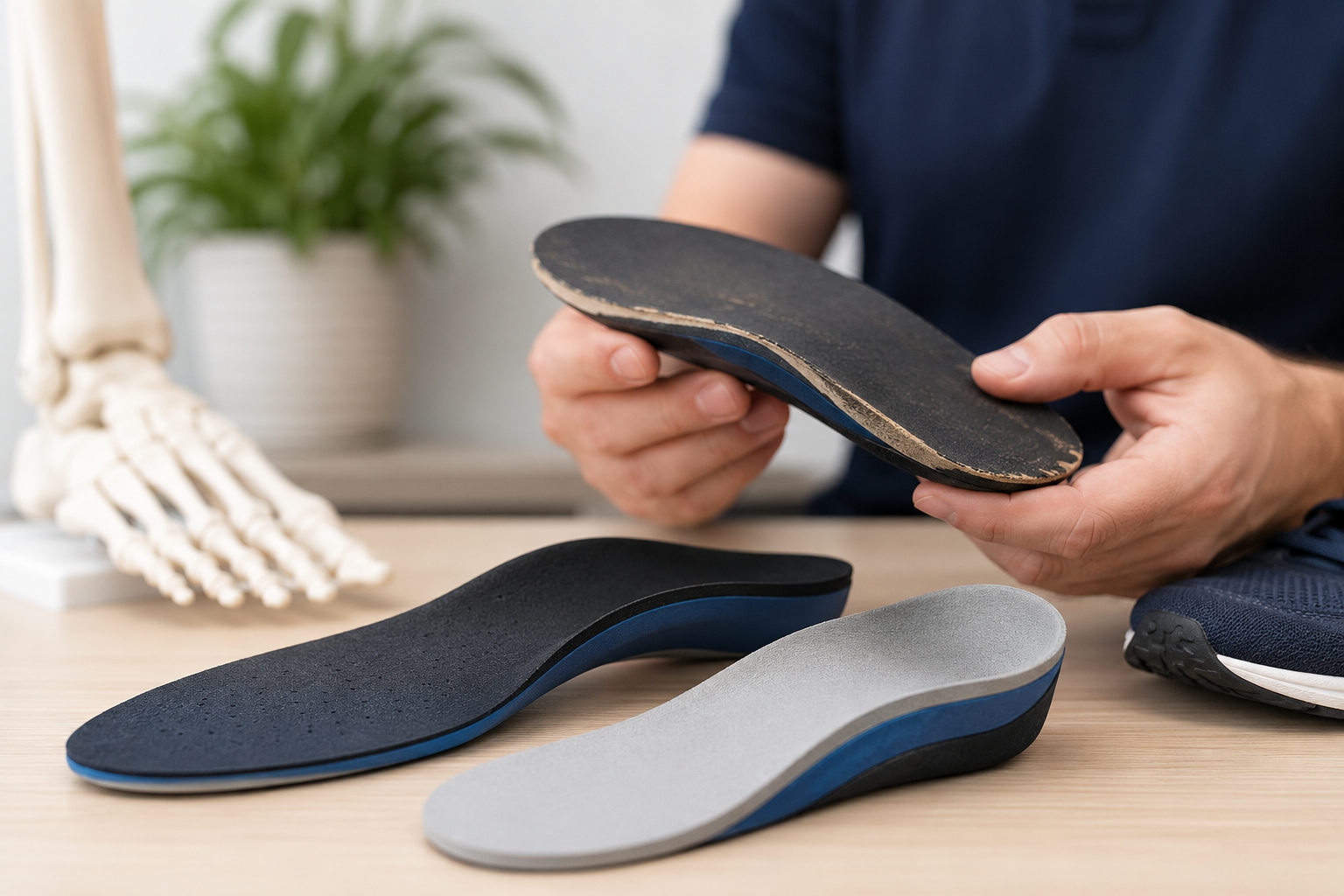
Once you’ve got a pair of orthotics that work, it’s tempting to treat them like a problem you’ve solved for good. You slot them into your shoes, the pain settles down, and life moves on.
Three years later, they’re still in there – a bit worn at the edges, maybe a bit flatter than they used to be – and it hasn’t crossed your mind to get them looked at, because as far as you know, they’re still doing the job.
The truth is that orthotics aren’t a set-and-forget device. Like the soles of your shoes, they wear down with use, and your feet themselves change over time, sometimes faster than people expect. Skipping reviews doesn’t just mean missing out on an upgrade; it can mean wearing devices that have quietly stopped supporting you the way they should.
How often should they actually be reviewed?
As a general guide, custom orthotics are worth reviewing every 12 to 18 months, even if nothing feels obviously wrong. That said, the right interval depends on a few things, such as how much you’re on your feet, what you use them for, and whether your circumstances have changed. Someone walking the dog twice a day wears through orthotics differently to a tradie on concrete for eight hours straight, or a runner logging 50 kilometres a week.
A few situations call for a review sooner than your next scheduled check-in:
- It’s been more than 18 months since your last review
- You’ve noticed new or returning pain in your foot, knee, hip, or lower back
- You’ve had a significant change in weight, either up or down
- You’ve increased your activity level, like taken up running, started a new job that’s more physical, etc.
- You can see visible wear, cracking, or flattening on the orthotic itself
- You’ve changed the shoes you wear them in most often
- You’ve had an injury, surgery, or a new diagnosis affecting your feet or lower limbs
Why orthotics wear out, even when they look fine
Orthotics take a hammering most people don’t think about. Every step you take, they’re absorbing force and flexing slightly to do their job, and that adds up. The materials used in most custom orthotics, whether that’s a firmer polypropylene shell or a softer EVA cushioning layer, gradually lose their original shape and shock-absorbing properties through everyday compression. This kind of wear is often invisible from the top. The orthotic can look basically the same while the structural support underneath has softened considerably.
Heat and moisture from your feet also play a role, particularly in Melbourne’s more humid months, gradually breaking down certain materials faster than you’d expect from wear alone.
Why your feet change even when your orthotics don’t
It’s not just the orthotic that shifts over time – your feet do too, and this is the part people are often most surprised by. Weight changes alter the load going through your feet and can change your arch height. Pregnancy can permanently change foot shape and size. Age brings a gradual loss of fat padding on the sole and changes in joint flexibility. Even something like switching from an office job to one where you’re standing all day can shift how your foot functions over a matter of months.
An orthotic that was perfectly moulded to your foot two years ago may now be supporting a foot that has genuinely changed shape, even if you haven’t noticed it happening day to day.
What happens if you skip the reviews
Wearing orthotics well past their useful life isn’t usually dangerous, but it can quietly undo the benefit you were getting from them in the first place. A worn-out orthotic can stop correcting the movement pattern it was designed for, which means the original problem, whether that was plantar fasciitis, shin splints, or knee pain, has room to creep back in. In some cases, an orthotic that no longer matches your foot can even start contributing to new aches in a different spot, because it’s no longer supporting you the way your foot currently needs.
The frustrating part is that this tends to happen so gradually that people assume the original condition has just “come back on its own,” when really, the device meant to be managing it has simply reached the end of its useful life.
What a review actually involves
A review appointment is generally quick and straightforward. We’ll check the physical condition of the orthotic itself – looking for cracking, flattening, or uneven wear patterns that tell us how it’s holding up. We’ll reassess your feet, your gait, and how the orthotic is currently interacting with your foot and footwear. If anything has changed, such as your symptoms, your activity levels, your weight, or the shoes you’re wearing them in, we’ll factor that in too.
Sometimes a review confirms everything’s still working well and you’re good for another year. Other times it flags that a refurbishment or a new pair is overdue. Either way, it’s a far better outcome than waiting for pain to resurface before finding out.
The bottom line
Orthotics are an investment in keeping your feet, knees, and back functioning well but that investment has a shelf life, and it’s shorter than most people assume. A review every 12 to 18 months, or sooner if something’s changed, is the simplest way to make sure they’re still doing the job you originally got them for. It’s a quick check that can save you from months of slowly creeping discomfort you didn’t need to put up with.
If it’s been a while since your orthotics were checked, our team at Watsonia Podiatry can assess them and make sure they’re still working for you. Book an appointment online or give us a call on 03 9432 2689.
